THE SECOND STORY · ENGINE EXPLAINED
How Pontiac’s factory V8 was built
An engine starts as metal shapes. Precision work turns them into a machine that breathes, burns fuel, and spins a shaft.
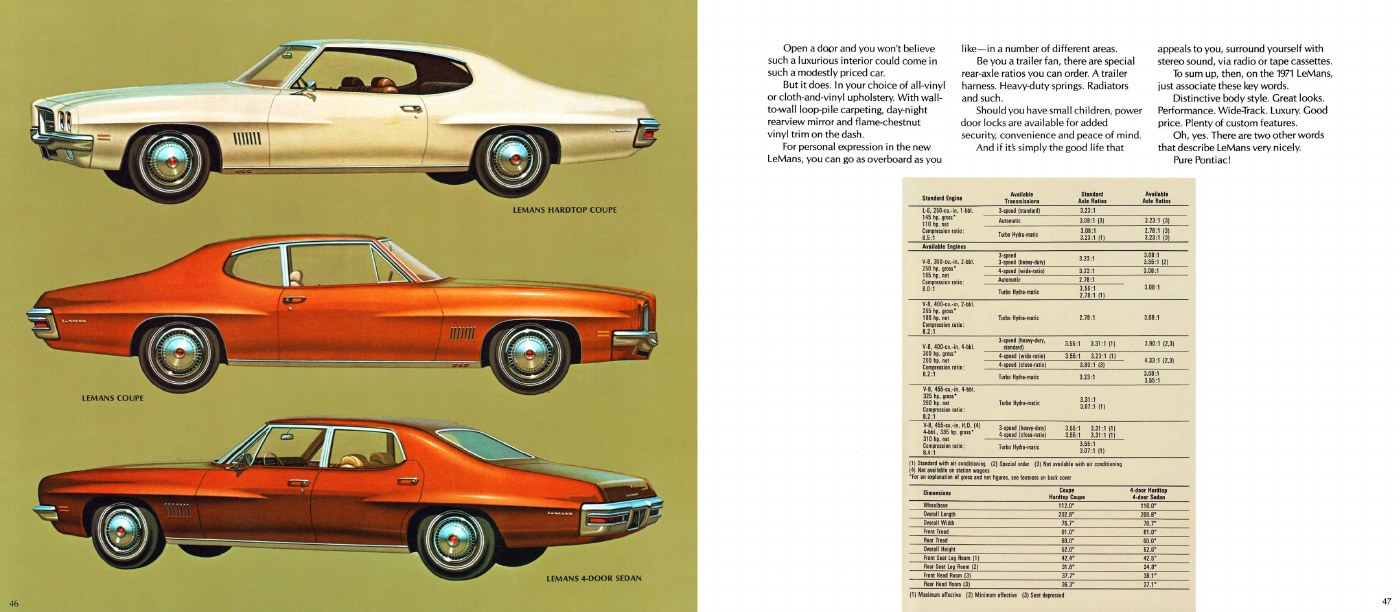
The 1971 LeMans range offered a six-cylinder and several V8s. This story explains the Pontiac V8’s basic construction; Zak’s installed engine and rebuild details are still unconfirmed. It is a simplified engineering overview, rather than a record of his car’s factory assembly line.
Cast the foundation. Machine the fit.
The block is the engine’s main housing. Pontiac’s V8 used an iron block and iron cylinder heads. Casting gives a part its rough shape; machining finishes the cylinder bores, bearing locations, and mating surfaces. An engine needs both strength and an accurate fit.
A V8 has eight cylinders in two banks of four. The heads close their tops; the crankshaft sits below. Coolant passages carry heat away from the metal.
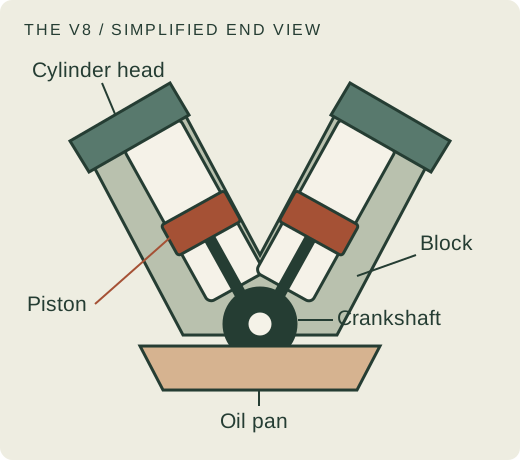
Fit the parts that turn.
The crankshaft rotates in bearings. Connecting rods link it to the pistons. Rings around each piston help seal combustion pressure and control oil. Correct clearances leave room for lubrication and heat expansion.
Watch one cylinder at work
Press Play, or drag the slider to follow the piston through a complete cycle.
Intake: the piston travels down while the intake valve opens to let the fuel-and-air mixture in.
The crankshaft makes two turns for every complete four-stroke cycle. The camshaft makes one. This is a schematic of one cylinder; the V8’s other cylinders take their turns keeping the crankshaft moving.
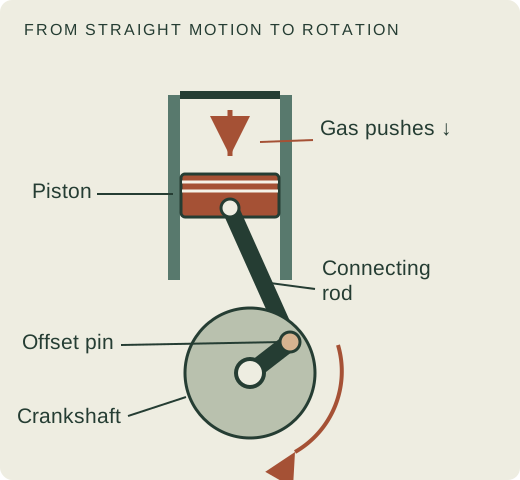
The oil pump supplies the lubrication system. The oil pan holds the oil beneath the engine.
Add the heads, valves, and timing.
Head gaskets seal the joint between block and heads. In Pontiac’s pushrod V8, a camshaft operates lifters, pushrods, and rocker arms to open the valves. A timing chain coordinates the camshaft with the crankshaft.
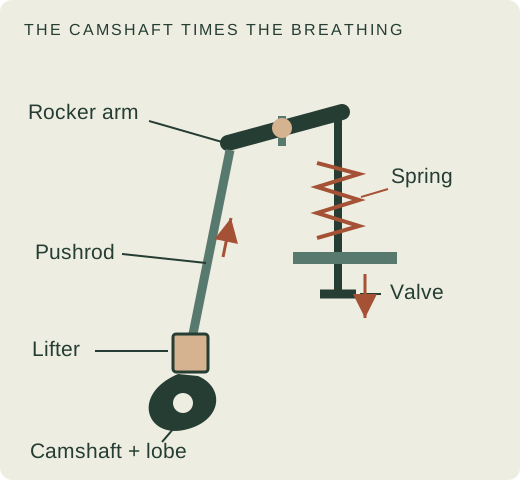
The intake manifold and carburetor deliver the fuel-and-air mixture. Spark plugs ignite it; exhaust passages carry spent gas out. These systems must work together for the engine to run.
Pontiac’s 1969 factory service manual · V8 construction, lubrication, and assembly reference ↗This earlier factory manual documents the V8 family’s mechanical layout. Its engine options and service settings are not presented as specifications for Zak’s 1971 car.
Four strokes turn fuel into motion.
With the parts assembled, each cylinder repeats this cycle. The cylinders take their turns so the crankshaft keeps rotating.
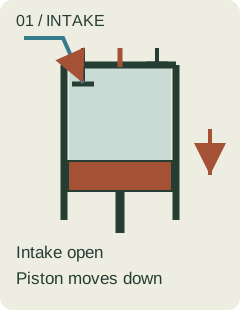 Intake
The piston moves down as the intake valve lets the fuel-and-air mixture enter.
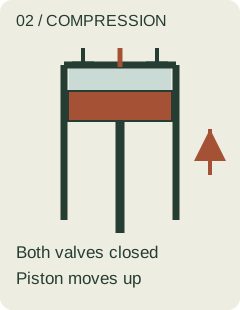 Compression
The piston rises with the valves closed, squeezing the mixture.
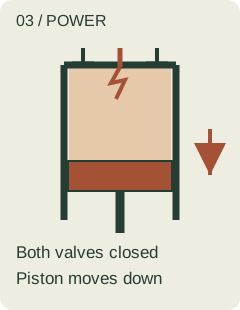 Power
PowerThe spark starts combustion. Expanding hot gas pushes the piston down and turns the crankshaft through the rod.
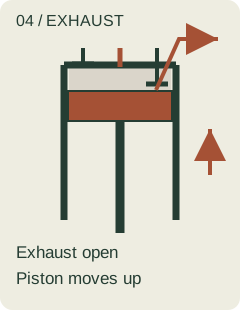 Exhaust
The piston rises again, pushing spent gas through the open exhaust valve.
The drawings show the main events in one cylinder. Actual valve timing overlaps near the ends of strokes; the pictures simplify that timing to make the cycle easier to follow.
NASA Glenn · the four-stroke engine cycle ↗What do 350, 400, and 455 mean?
Those numbers describe engine displacement in cubic inches: the combined volume swept by all the pistons. Bore is cylinder width; stroke is piston travel. They determine displacement together. A larger number alone does not establish horsepower or identify Zak’s engine.
NASA Glenn · bore and stroke ↗Pontiac’s 1971 brochure · LeMans engine choices ↗Strong metal gives it a shape.
Precision lets it work.
When Zak’s engine identification and work records are available, we can follow its own next chapter: what stayed, what changed, and why.